




Glasses for a Low Nose Bridge: How to Choose a Frame
October 13, 2026

The first days with new glasses can feel unfamiliar: images look different, and you may notice strain, headaches or mild discomfort when moving. This does not prove the prescription is wrong, but it is also no reason to endure severe symptoms. Prescription changes, lens type, centration and frame fit all matter.
Quick answer: mild symptoms that improve may involve an adjustment period. Persistent pain, marked dizziness, double vision or blurred vision need an optician or ophthalmologist’s assessment. Sudden vision loss, severe eye pain or neurological symptoms require urgent care.
Why do new glasses feel different?
A changed prescription changes how images focus on the retina. When the cylinder or axis for astigmatism changes, straight lines may initially appear unusual. Larger, curved or differently positioned lenses can also change peripheral perception. A remote explanation cannot establish whether your particular case is only adaptation.
Five possible causes of discomfort
- Changed prescription, CYL or AXIS: the new correction changes your visual experience.
- Centration and pupillary distance: optical centres must suit the particular prescription and frame.
- Frame fit: pressure on the temples, nose or ears can itself cause pain.
- Different lenses: progressive and other specialist designs have specific clear-viewing zones.
- A separate cause: dryness, migraine, ocular-surface problems or another condition need their own assessment.
How long does adjustment take?
There is no single period for everyone. A short adjustment period can be discussed for mild symptoms that diminish, but there is no universal rule to wait a fixed number of days. If symptoms are severe, affect driving or do not settle, have the prescription and finished glasses checked promptly.
What should the optician check?
- Do the sphere, cylinder and axis match the prescription?
- Are the lenses correctly centred for this frame?
- Does the bridge fit, and do the temples press?
- Does the lens type suit distance, reading, monitor or progressive use?
- Have lens angle and distance from the eyes changed compared with the old pair?
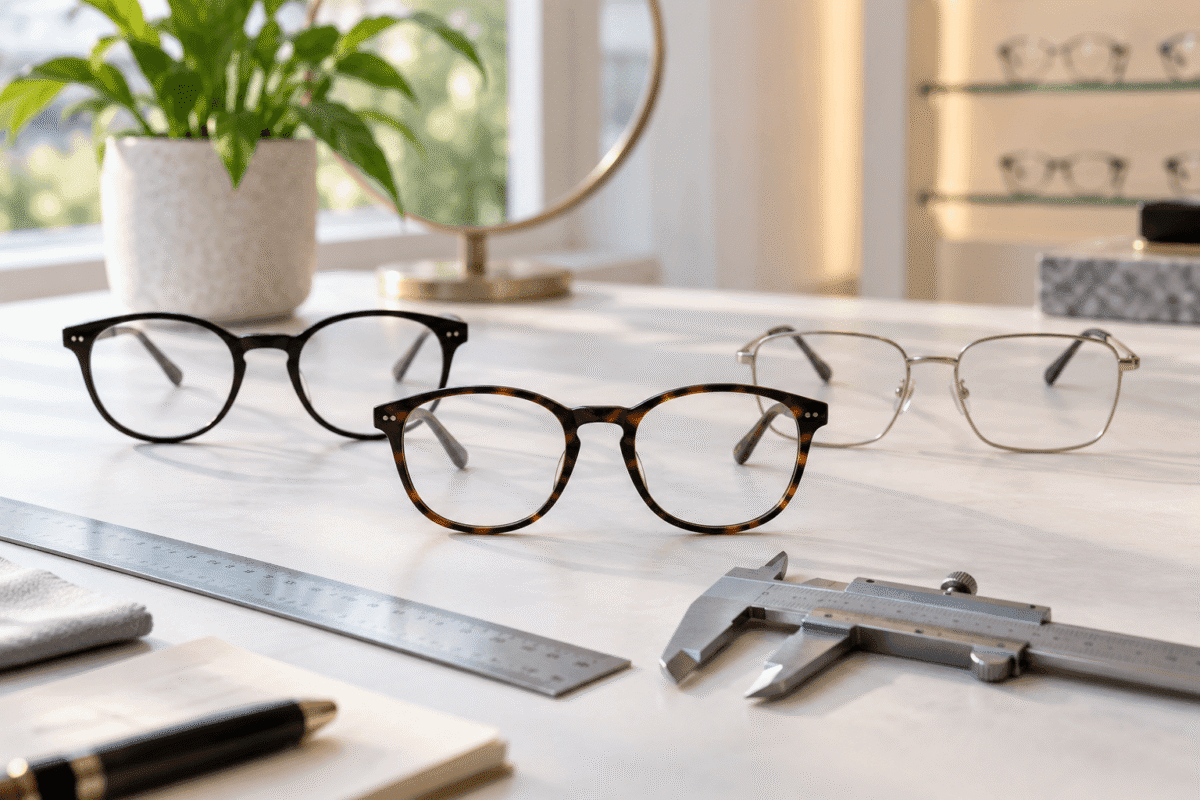
Compare frame measurements separately from prescription values. A well-fitting pair you already own is a useful reference.
Could the frame be too narrow?
Yes. Pain behind the ears or on the sides of the head can relate to mechanical pressure. A slipping frame can change how you look through the lenses. Browse optical frames, but do not replace a check of your finished prescription lenses with a random new purchase.
When should you see an ophthalmologist?
For persistent visual disturbance, double vision, severe headaches or repeated problems with several pairs. Sudden vision loss, a very painful red eye, severe headache with nausea or other sudden severe symptoms require urgent medical attention.
Frequently asked questions
Should I wear new glasses constantly to adjust?
Follow your professional’s instructions for your correction. Do not drive in glasses that make vision unreliable.
Can a new cylinder make the floor look tilted?
Changes in image perception are possible. If pronounced or not improving, have the glasses checked.
Will computer glasses help a headache from a new prescription?
Not necessarily. First establish the cause and check the particular correction.
Sources
This article does not replace an eye examination.