




How to Measure Glasses for Clip-On Sunglasses
November 21, 2026
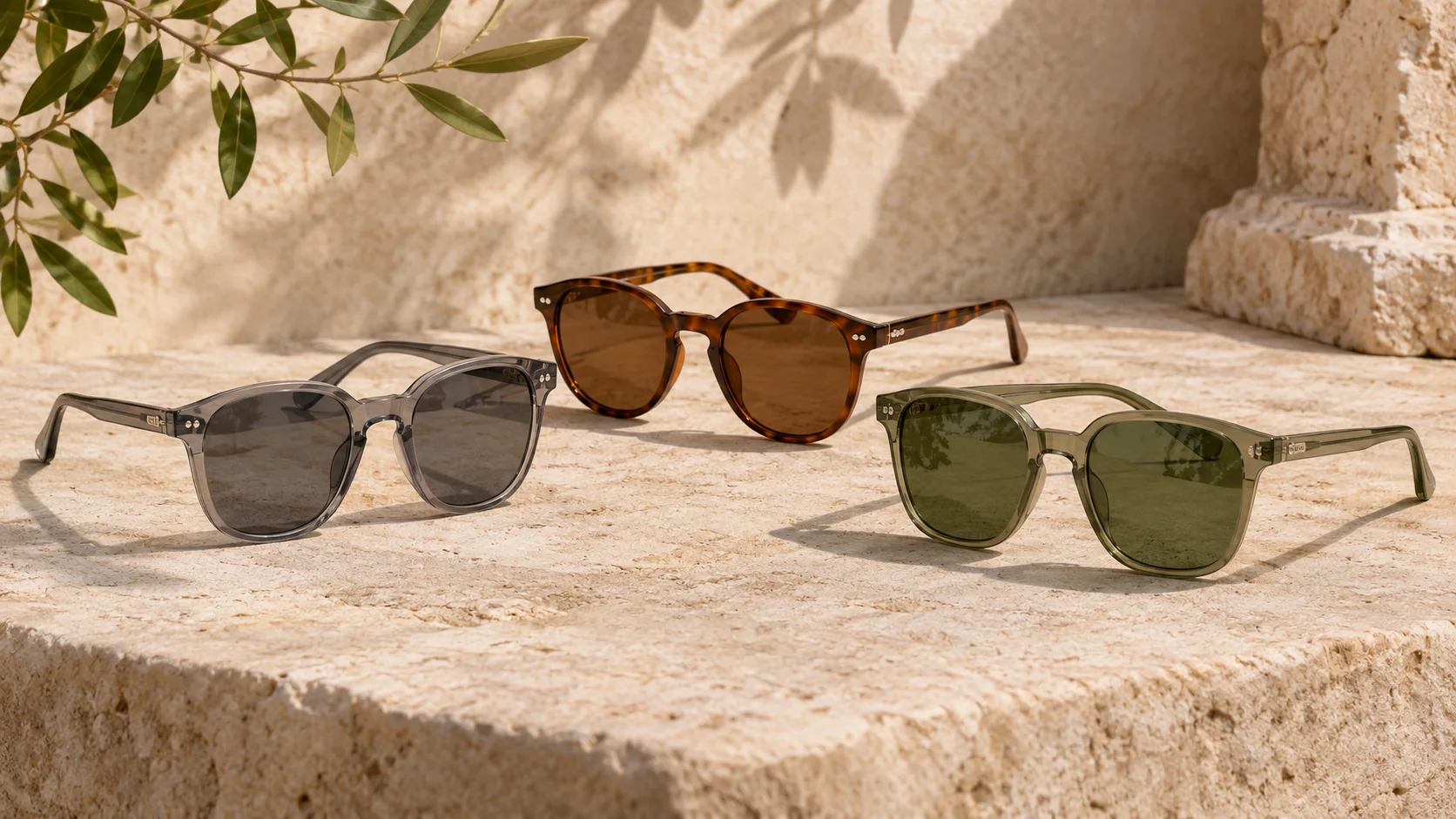
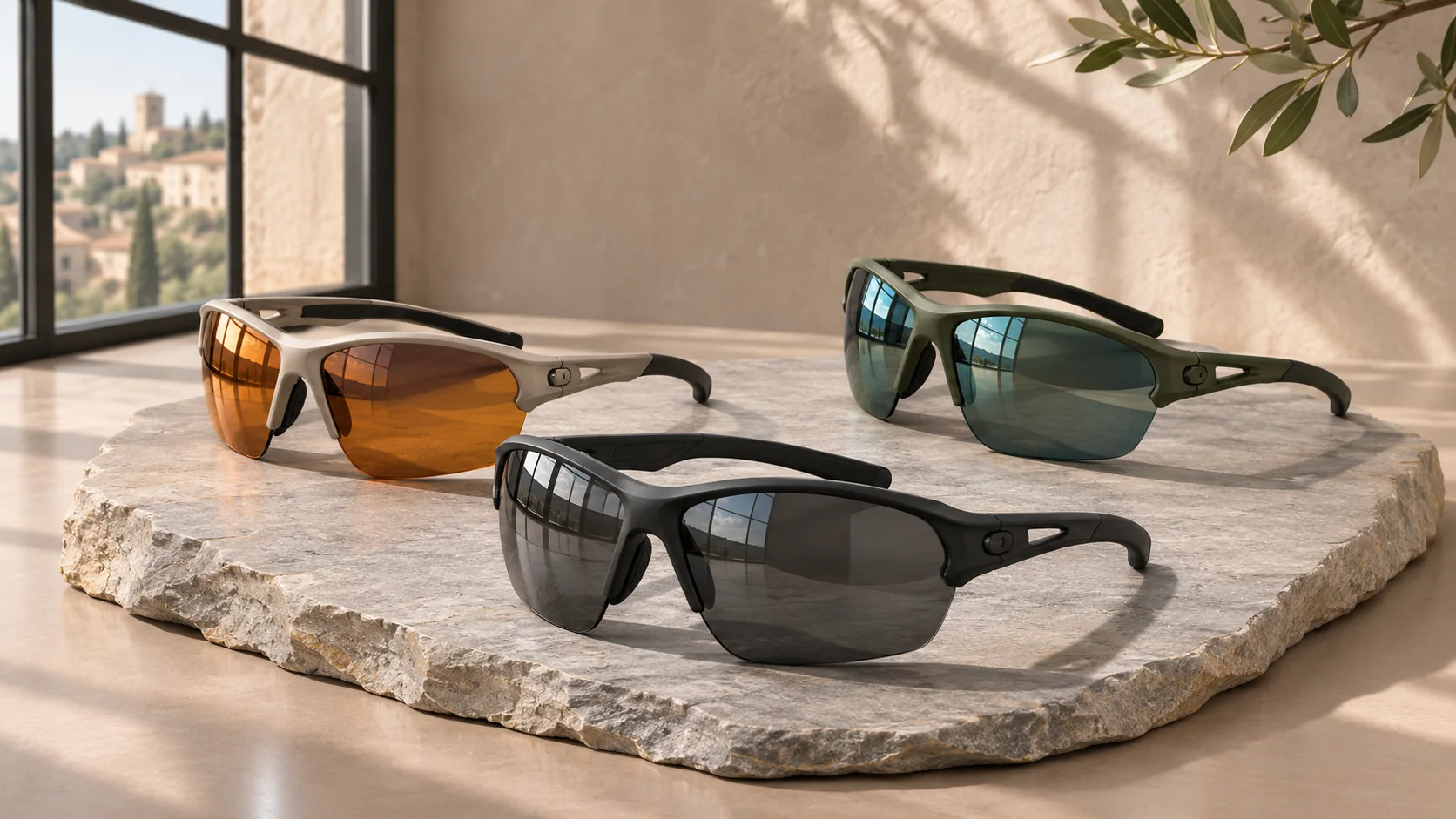
On a product page, grey, brown and green often look like a styling choice. Put the lenses on and the colours around you change. Road markings, foliage and a white shop sign can all look slightly different. The right choice depends on what you want to see comfortably and where you’ll use the pair.
What each colour looks like
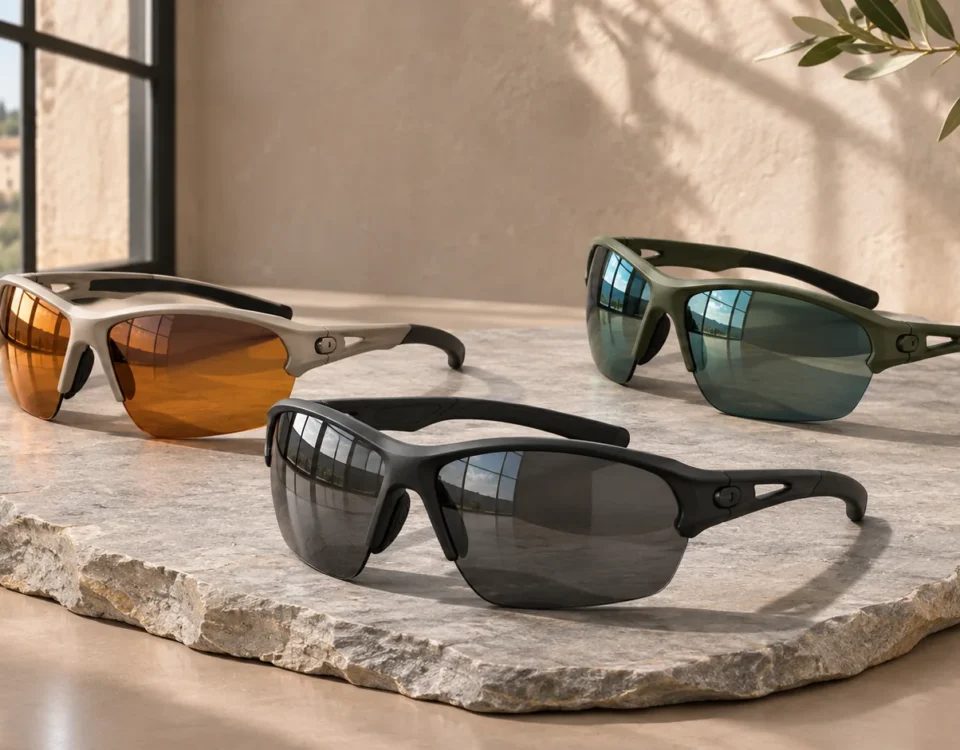
Grey generally keeps colours closest to their usual appearance. If you dislike a warm cast or want one pair for everyday errands and travel, compare grey lenses first. Brown or amber adds a warmer cast. Some people prefer that look in mixed daylight because edges and textures can appear more pronounced. Green often feels less warm than brown. Compare it with grey using the same scene to see which colour shift you notice less.
Try looking at a white surface, a patch of greenery and an object in shadow through each lens. Compare models with a similar tint category. A darker brown lens and a lightly tinted grey lens tell you as much about tint depth as they do about colour.
Read the other labels
Check UV protection separately, even if the lens looks dark. If reflected glare is your main issue around water or on bright roads, check whether the model is polarised. Filter category describes visible light transmission. If the sunglasses are for driving, check the manufacturer’s suitability label. Category 4 sunglasses are too dark for driving, according to the Association of Optometrists.
A practical way to shop
Decide whether you prefer neutral or warm colours, then compare only models suitable for the brightness and activity you have in mind. Browse the sunglasses range and check the specification for the exact frame and lens colour code. A single frame may be sold with more than one tint.
Frequently asked questions
Does a darker tint mean better UV protection?
Lens darkness describes how much visible light is reduced. Check the UV information for the exact lenses separately.
Can grey, brown and green lenses all be polarised?
Yes. A tint colour can be offered with or without polarisation. Check the product specification for the exact variant.